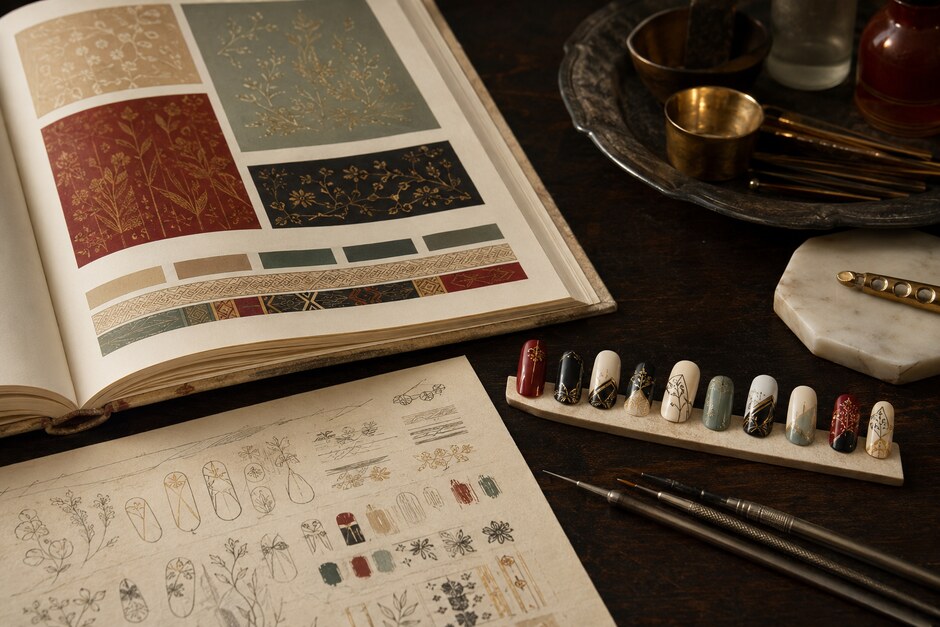
Vintage Details, Modern Nails: How to Translate Historical Motifs
Historical references can give nail art a richer starting point than a trend image alone. Textile borders, architectural inlay, book decoration, ceramics, jewelry, posters, and earlier manicure styles all contain decisions about color, rhythm, scale, and ornament. The most useful approach is not to shrink an entire object onto a nail. It is to identify one principle and rebuild it for a curved surface, modern materials, and a ten-nail sequence.
Begin with a traceable source
Choose a museum collection, archive, library, or publication that provides a date and context. Save the source information with the reference. A vague “vintage” label can collapse very different places and periods into one mood. Context makes the design more specific and helps avoid using culturally meaningful symbols as decoration without understanding them.
Look beyond the most famous example. A page of border studies or utilitarian object may offer a clearer pattern than an elaborate masterpiece.
Describe the system, not the object
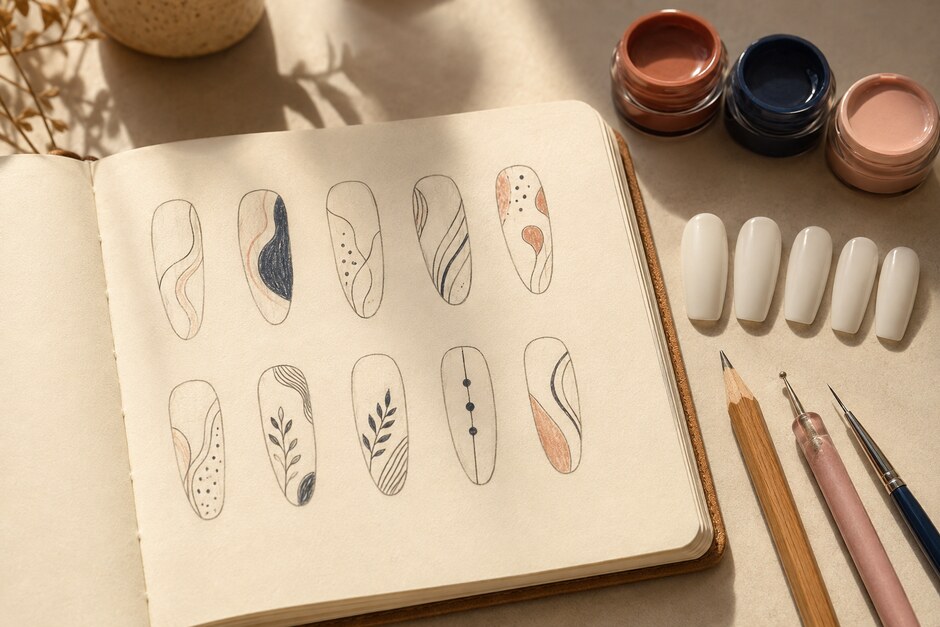
Write three observations without naming the subject. For example: “small gold marks repeat inside a dark field,” “wide cream borders separate dense red panels,” or “curved lines change direction at regular intervals.” These sentences describe mechanisms that can be translated.
Then reduce the reference to a small palette and two shape families. If the design still feels distinctive after simplification, you have found its structure.
Change at least three variables
Translation becomes more original when several conditions change. Alter the subject, scale, material, and arrangement. A woven border might become a pair of interrupted liner paths. A ceramic color division could become alternating half-moon fields. A book ornament might inspire spacing rather than literal symbols.
Avoid tracing a complete motif onto every nail. Preserve the principle while developing new shapes suited to the set.
Build a contemporary palette proportion
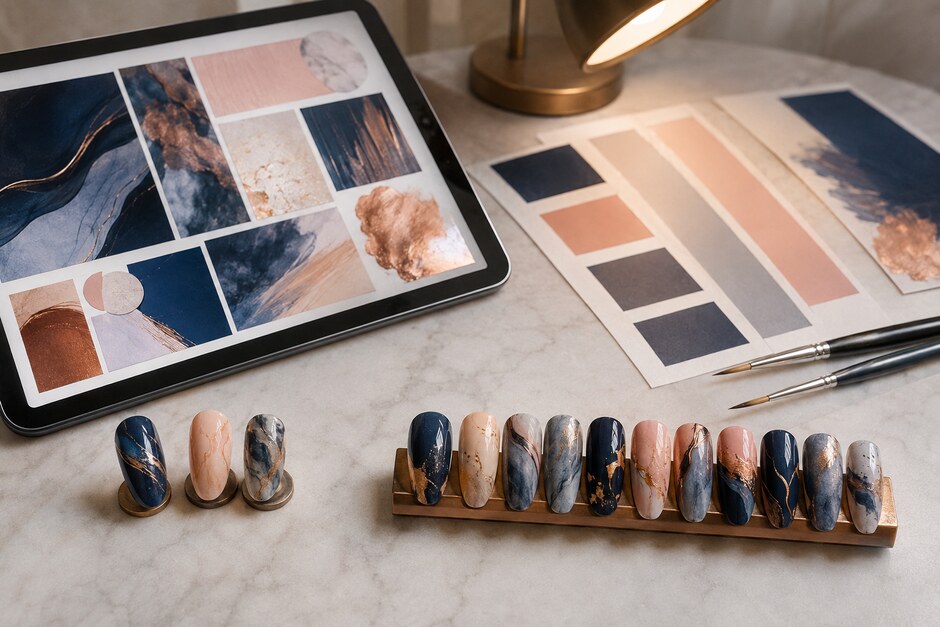
Historical objects often use materials and pigments that behave differently from modern nail products. Match the relationship rather than chasing an exact screen color. If the source is mostly dark green with small gold accents, keep that proportion even if the chosen green is cooler and the accent is a modern metallic gel or lacquer.
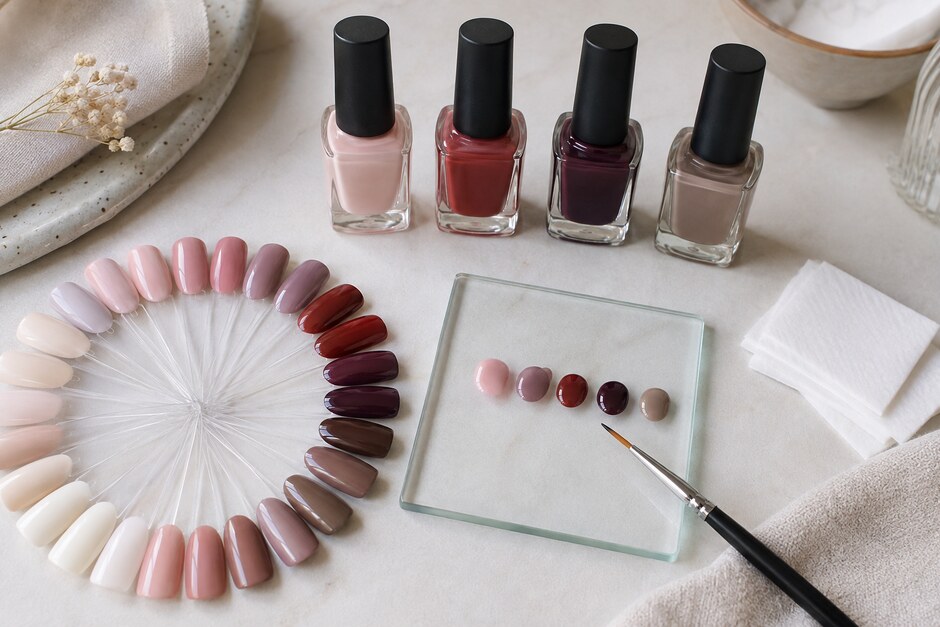
Swatch the real products and test finish. Matte topcoat can flatten a palette pleasantly, while high gloss may make a restrained metallic accent appear much stronger. Use compatible products and follow their application instructions.
Distribute the reference across ten nails
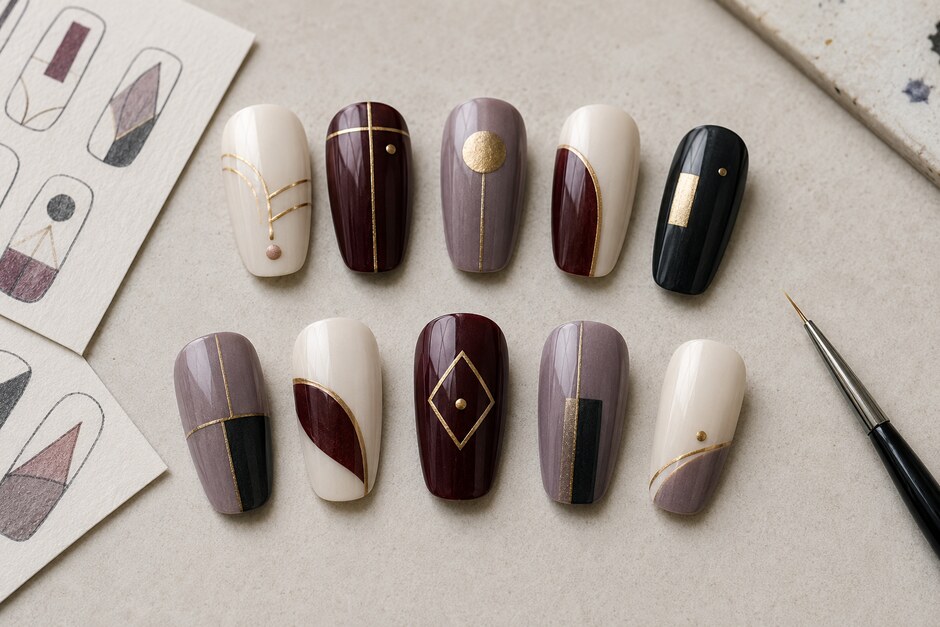
Let the set reveal the idea gradually. Quiet nails can carry the background color, supporting nails can introduce the repeated line, and two focal nails can show the fullest interpretation. This is often more elegant than fitting the entire historical pattern on each finger.
Use asymmetry carefully. A border motif can appear on opposite edges across the hands, creating movement. A small accent can return after two quiet nails, echoing the measured intervals in the original source.
Test legibility at nail scale
Paint one display tip and view it at arm’s length. Fine historical detail may merge into texture. Decide which line, gap, or contrast must become larger. Simplification is not a loss of respect for the reference; it is what allows the visual principle to survive on a much smaller surface.
Check the tip from the side as well. Important forms placed too close to the sidewall may disappear from the frontal view.
Keep research attached to the finished design
Save the source, your written observations, palette swatches, test tip, and final set photograph. If sharing the design publicly, credit the collection or source when possible and describe what was studied. This makes the creative process visible and separates research from unacknowledged copying.
Historical material is most useful when it expands the questions you ask: how can a border create rhythm, how little metallic color is enough, or how can dense ornament coexist with open space? The contemporary set should answer those questions in its own language.