Five Bottles, Twenty-Five Shades: Build a Nail Color Capsule
A useful nail color collection is not measured by the number of bottles on a shelf. It is measured by how reliably those bottles work together. Five carefully chosen colors can create a surprising range of moods when you understand their undertones, opacity, finish, and behavior in layers. The goal of a capsule is not to mix formulas inside a bottle. It is to build a small system whose colors can stand alone, alternate across a set, and combine without visual noise.
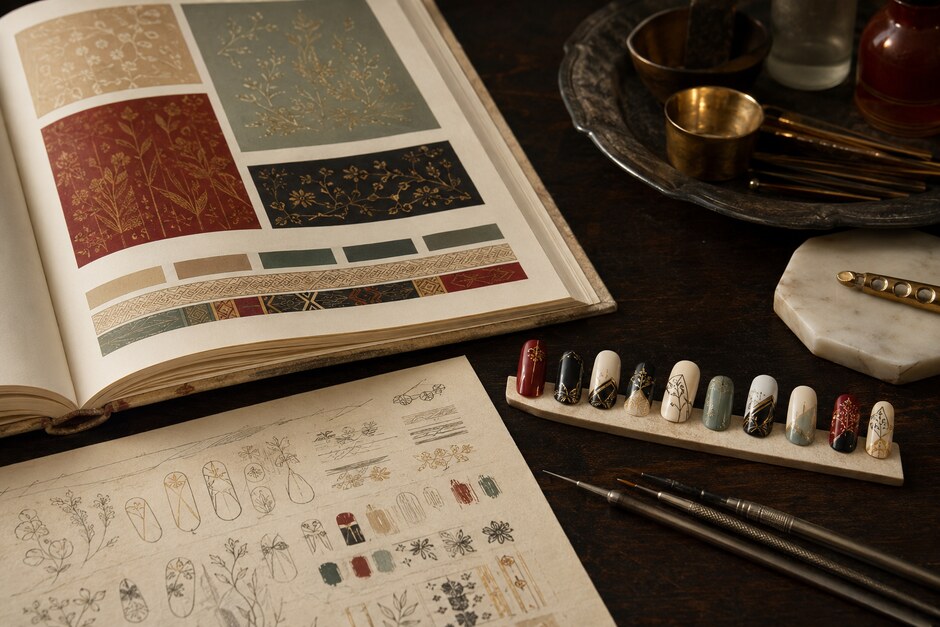
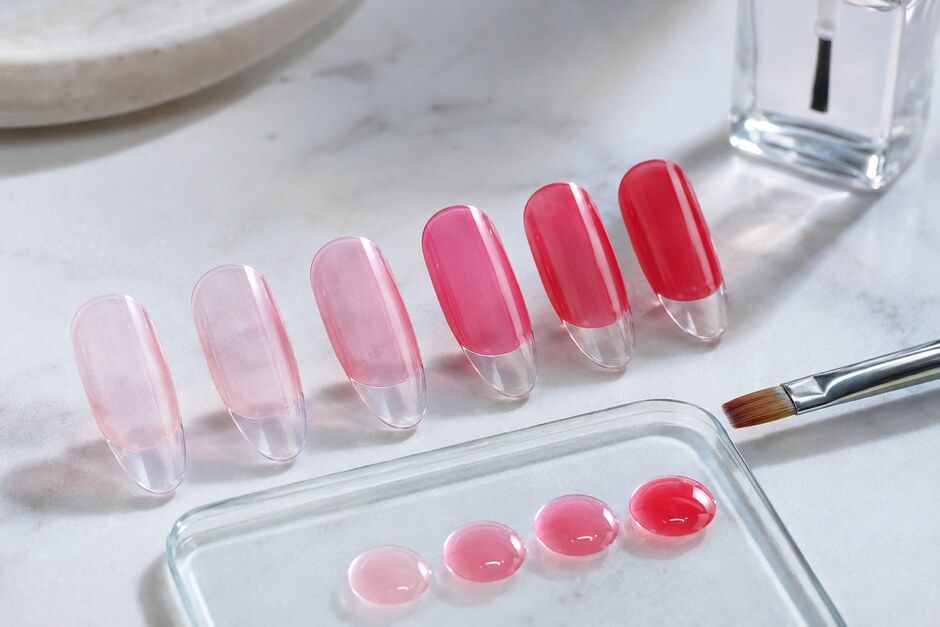
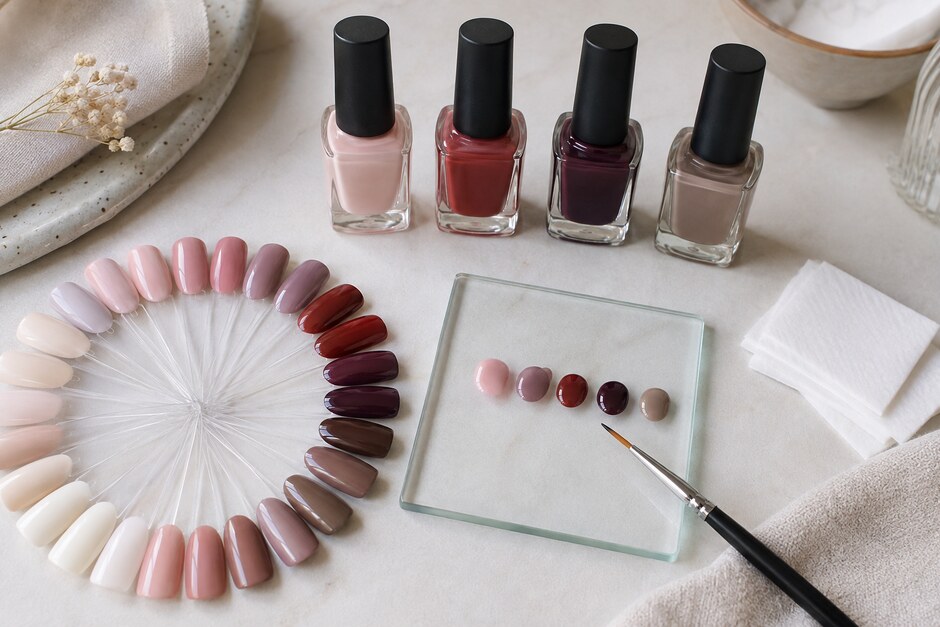
Start with swatch tips rather than your own nails. You can compare more combinations, label the results, and keep the final set as a reference for future designs.
Give every bottle a clear role
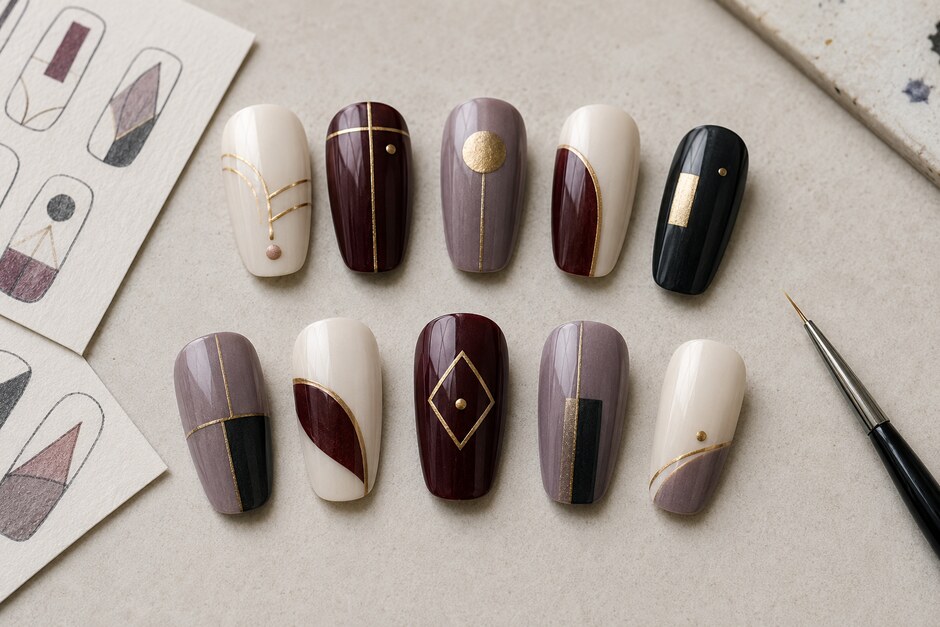
Choose five polishes that do different jobs. A practical starting group is a sheer neutral, a soft mid-tone, a confident red or berry, a deep anchor shade, and one quiet accent such as taupe, sage, or muted blue. Avoid selecting five colors simply because each looks attractive alone. Ask whether they create useful contrast when placed side by side.
Include at least one light and one dark value. If every shade sits in the middle, a ten-nail set can feel flat even when the hues differ. A sheer neutral adds breathing room, while the deep color gives fine lines and focal nails enough weight.
Map undertone before designing
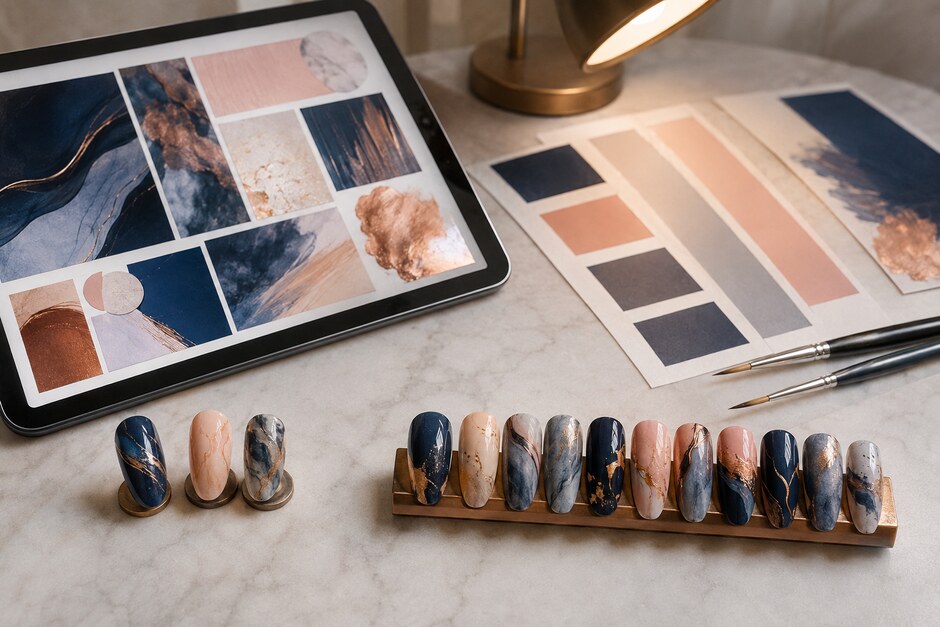
Paint two coats of every polish on separate clear or milky swatch tips, following the product instructions for drying or curing. View the samples against white paper and then beside one another. A “neutral” pink may reveal a blue, peach, beige, or mauve bias. A red can lean orange, rose, or brown.
Group the shades by temperature rather than bottle appearance. If four lean warm and one is distinctly cool, decide whether that contrast is intentional. The cool shade can become a focal accent; used everywhere, it may make the palette feel accidental.
Create combinations through placement and layers
Do not pour unrelated polishes together or mix products from different systems unless their manufacturer explicitly supports it. You can build variety more predictably through safe surface layering and composition. Test each combination on a separate tip and follow the stated dry or cure time for every layer.
- Place the sheer neutral over each opaque shade to soften and unify it.
- Use the deep shade as a micro-line, dot, or narrow side panel over the lighter colors.
- Alternate two related mid-tones across the hand rather than combining them on every nail.
- Try a small accent over the sheer base so negative space remains visible.
- Compare glossy and matte top finishes on duplicate tips if both systems are compatible.
Number the swatches instead of relying on memory. The difference between one thin coat and two full coats can be as important as the color itself.
Check the palette in real light
Salon lights, daylight, and warm evening lamps change the apparent temperature of polish. Move the swatch fan between at least two light sources. Look for shades that suddenly become gray, neon, or much darker than expected. This does not make them unusable; it tells you where they belong in the set.
Hold the tips near the hand without pressing product against skin. Notice which shades create gentle harmony and which produce graphic contrast. Personal preference matters more than universal seasonal rules, but observation is more reliable than choosing from a screen.
Build three ready-to-use formulas
Turn the capsule into three repeatable set plans. A quiet plan might use the sheer base on six nails, the mid-tone on three, and one dark focal nail. A rhythmic plan can alternate two values and repeat a small line detail. A dramatic plan may use the deep anchor across most nails with the accent appearing only twice.
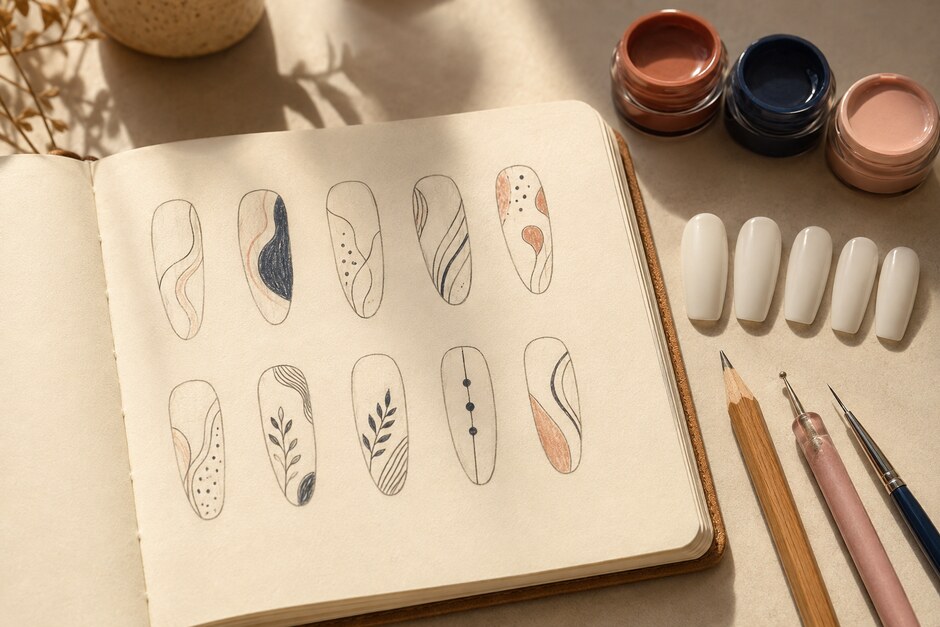
Sketch each formula as ten small nail shapes. This exposes an imbalance before any polish is opened. If the accent appears randomly, move it until the eye travels across the set rather than stopping at one isolated nail.
Keep the capsule useful
Store the labeled swatches with the bottle names, coat count, base color, top finish, and date. Polish appearance can change as formulas age, and a written record makes the shift easier to spot. Use products only while they behave normally and according to their storage guidance.
A capsule earns its place when it removes decisions. After testing five bottles carefully, you should be able to assemble a quiet manicure, a graphic set, or a layered variation without starting the color search from zero.